Hakushu Whisky Auction Analysis & Price Trends

| Country | Japan |
| Founded | 1973 |
| Status | Active |
| Website | http://www.suntory.co.jp/fa… |
| Owner | Suntory Holdings Ltd. |
| Wash stills | 6 |
| Spirit stills | 6 |
| WhiskyBase rating | 87.46 |
The Hakushu distillery was designed as the largest distillery in the world, but funding problems made it necessary to change the plans. The abridged project was built in 1973, but the work on the expenditure of production continued. The new part of the distillery was launched in 1981.
During the economic boom in the 80s of the last century, Hakushu was the largest distillery in the world with 36 distillation cubes in two separate buildings. The old part of the distillery was called Hakushu West, and the new one carried the name Hakushu East.
In the late 1980s, the Japanese industry experienced a deep crisis and Hakushu West was closed. 12 pairs of distillation cubes are involved in the workflow now.
Hakushu whisky is an important component of the Suntory blend – Hibiki.
Interesting releases can be highlighted:
- Hibiki 30 Year Old - Aritayaki Limited Edition (96+ WB rating, DB)
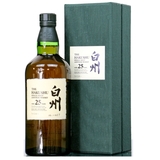
- Hakushu 25 Year Old - Limited Edition (92+ WB Rating, DB)
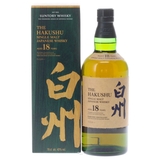
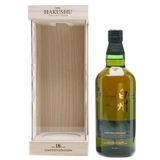
- Hakushu 18 Year Old - Limited Edition (92+ WB Rating, DB)
- Hakushu 1993 - Single Cask (15 y.o., 91+ WB rating, CS, SC, DB)
- Hakushu 1989 - Sherry Cask (20 y.o., 91+ WB rating, CS, SC, DB)
- Hakushu 1992 - The Owner's Cask (19 y.o., 91+ WB rating, CS, SC, DB)
- Hakushu Sherry Cask (90+ WB rating, DB)
Notable Hakushu bottles
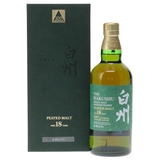
Bottles worth a closer look for collectors and investors, for their potential value and rarity.

Explore Hakushu lots from online auctions
Over 12654 sold and 25 live Hakushu lots in our database. Use the market history to:
- Compare asking prices with recorded auction results.
- Find live bottles and choose where to bid.
- Estimate what a bottle may be worth before buying or selling.
Sign up for full access to sales history, live lots and more.
Top 10 Hakushu lots sold at auction
The most expensive Hakushu bottles sold, by hammer price, across the auctions we track. Prices are in £ by default — click a price to see € and $.
Live Hakushu lots on Catawiki
Hakushu bottles currently open for bidding at the Catawiki whisky auction. The dot marks the closing time; it turns red on the day a lot ends.
Top 20 Hakushu bottles at online shops
Prefer to buy outright rather than bid? These are current retail offers for Hakushu from online shops — compare them and pick the best one. Prices are in £ by default; click a price to see € and $.
The chart of monthly trade volumes of the Hakushu distillery. The chart is in direct proportion to the lot quantity and prices, displaying the liquidity of lots on the secondary market and interest in them. Trading volume growth indicates the drawn attention to distellery
The chart of lot price fluctuation by month of the Hakushu distillery. The lot average price chart indicates the growth or fall of the investment attractiveness of whisky over time.
The chart, representing traded lot quantity by month of the Hakushu distillery. The chart displays the popularity and seasonal dependence of the quantity of the lots auctioned online.
Frequently Asked Questions
Answers to common questions that collectors and investors ask about Hakushu whisky.
A few factors determine what a Hakushu bottle sells for:
- Identifying the bottle: Start by pinning down exactly which release you have — the bottling year, alcohol strength, and age all matter. Two bottles that look similar can be very different releases.
- The specific release and its condition: Hakushu has had many releases over the years, and which one you have has the biggest effect on value. Condition counts too: the state of the label, the fill level, and the packaging.
- Where you buy or sell: The venue affects the price. Bottles often go for less at auction than at retail. If you are selling privately, recent auction results are usually the most realistic benchmark — just remember the auction house takes a commission.
You can also look up a bottle on Whisky Hunter to see what it has sold for at auction. Past results won't give you an exact figure, but they show the range similar bottles have traded in.
The same bottle can fetch different prices for a few reasons:
- Who's bidding: Each auction draws a different set of bidders, and how much they are willing to pay on a given day sets the final price.
- Where the auction is held: Demand varies by region, especially when a Hakushu release is hard to find in a particular market.
- When it's held: Timing matters. Broader market mood and seasonal demand both move prices up and down.
There's no single best venue — it depends on a few things:
- Your location: Where you are affects what you can buy and sell, and at what cost.
- Shipping: The cost and hassle of shipping a bottle, either to sell it or after buying it, can make or break a deal.
- Auction platforms: Auctions tend to reflect the going market price, but commission rates, the bidder base, and timing cause prices to differ from one platform to the next.
- Market conditions: Checking current prices and past results helps you spot when it's a good time to buy or sell.
Working out the best venue for a specific bottle comes down to weighing these factors. Our analysis tools let you compare a bottle's results across auctions and regions, so you can decide with the actual numbers in front of you.
No one can reliably predict how a Hakushu bottle's value will move. Past auction prices tell you where it has been, not where it is going. Over a short window — say the last month or two — recent sales give a rough sense of current value, but anything longer than that is much harder to call.
Prices are driven by supply and demand, which in turn depend on rarity, age, the brand, the wider economy, and what buyers happen to want — none of which are predictable.
Markets do tend to move in cycles, and a dip is sometimes followed by a recovery. But that's a tendency, not a rule, and it's not a basis for an investment decision on its own. If you are considering whisky as an investment, it's worth using historical data and, where it helps, getting professional advice.
In short: treat whisky as a long-term interest rather than a sure bet. As with any investment, there is real risk of losing money, and past performance is no guarantee of future results.
A cask of Hakushu can be a rewarding thing to own, but it comes with real risks and complications. Some things to think through before you commit:
- It's a specialised investment:
Cask ownership can pay off, but only if you understand and accept the risks that come with it.
- Storage:
Look into where the cask is stored — the costs, the conditions, and the regulations — since all of these affect how it matures.
- Transferring ownership:
Make sure ownership is properly documented and transferred through the correct legal process, so your claim to the cask is secure.
- Fraud:
Cask scams do happen. Check the ownership details carefully and vet the seller before parting with any money.
- Buying at auction:
Buying through an established auction house tends to be safer, as they usually vet sellers and confirm that the ownership transfer is legitimate.
- Doing the research:
Our platform holds records of casks sold or listed at auction, which you can use to get a sense of the market. This blog article walks through how to analyse cask sales using the site.
In short, a cask investment in Hakushu calls for a solid grasp of the market, the legal side, and the practicalities of ownership and storage. Our data can help you research the decision, but the choice — and the risk — is yours.
Whether a Hakushu bottle is worth collecting depends on a handful of things:
- Rarity: Limited editions and discontinued bottles tend to draw the most collector interest.
- Reputation: Well-regarded brands and bottlings usually hold their standing among collectors.
- History: Bottles tied to a notable event or person can carry extra appeal.
- Condition and packaging: The bottle, label, capsule, and box all affect how a bottle is valued.
- Market trends: Current demand and collector sentiment shape how sought-after a bottle is.
- Personal taste: Your own preferences and how a bottle fits your collection matter as much as anything.
Adding a Hakushu bottle to your collection is ultimately a personal call, shaped by your interests, budget, and what you are trying to build. Our platform lets you compare options and past results so you can make that call with good information.
- We work to keep the data accurate and complete. Our team gathers it from reliable public sources, using a mix of automated tools and manual checks.
- We aim for accuracy, but mistakes can still slip through. You can cross-check any figure against the original source, and we recommend doing so when it matters.
- Alongside the raw data, we provide tools to help you read market trends and gauge what a particular bottle is worth.
The platform is an information resource, not a substitute for professional advice. We provide the data as-is and it is not investment advice — weigh the risks yourself and seek professional guidance when you need it.
Whisky Auctions Schedule & Fees
Market tools for collectors, traders and whisky lovers
Auction history, live lots, retail offers and collection tools in one focused workspace.